Stone Walkway & Paver Installation in Norwell, MA
A good walkway does more than get you from the driveway to the front door. It makes your home easier to access, gives your landscaping a finished look, and keeps everyone from tracking mud through the house. At Presidential Park Landscape, we design and install custom stone walkways and paver walkways in Norwell, MA, and throughout the South Shore. Whether you're replacing an old, uneven path or adding a new walkway through your garden, we'll help you choose materials and a layout that fit your home.
From classic bluestone and granite to brick and concrete pavers, we build walkways that look great and hold up through New England weather.
Call 781-659-2645 to discuss your walkway installation project.
Get a free quote
Contact Us
Custom Stone Walkways for South Shore Homes
Think about how often you use the walkway leading to your front door. It's where guests arrive, packages get delivered, and everyone walks in and out of the house.
If the stones are loose, the path is too narrow, or water collects along the way, even a short walk can become a hassle.
We've seen plenty of older South Shore properties where the original walkway has settled over time. Tree roots lift sections of stone, grass grows between the joints, and winter frost leaves the surface uneven.
Sometimes the best solution is to rebuild the existing path. Other times, changing the layout can make the whole front yard work better.
We install walkways for a variety of needs, including:
- Front entrance walkways
- Driveway-to-front-door paths
- Garden and backyard walkways
- Bluestone walkways with granite borders
- Brick and concrete paver walkways
- Walkways connecting patios and outdoor living areas
- Stone paths with steps for sloped yards
- Side-yard paths and access walkways
Whether you want a straight, formal entrance or a curved garden path, we'll help you plan a walkway that feels like it belongs on your property.
Choosing the Right Walkway Materials
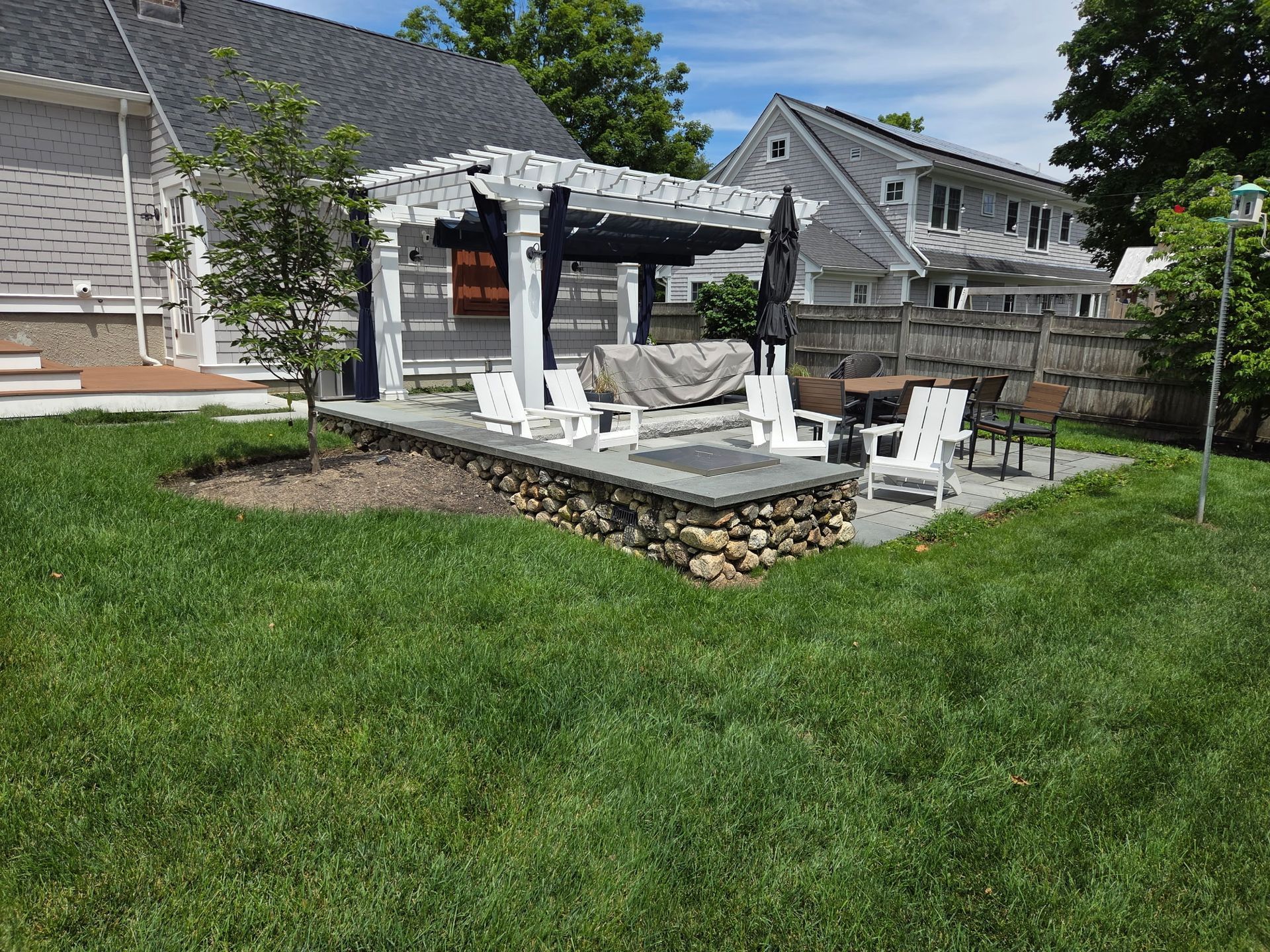
The material you choose has a big impact on the appearance, maintenance, and cost of your walkway.
Around Norwell, Hingham, and Cohasset, natural stone is especially popular because it pairs well with traditional New England homes.
But natural stone isn't the only good option.
Bluestone Walkway Installation
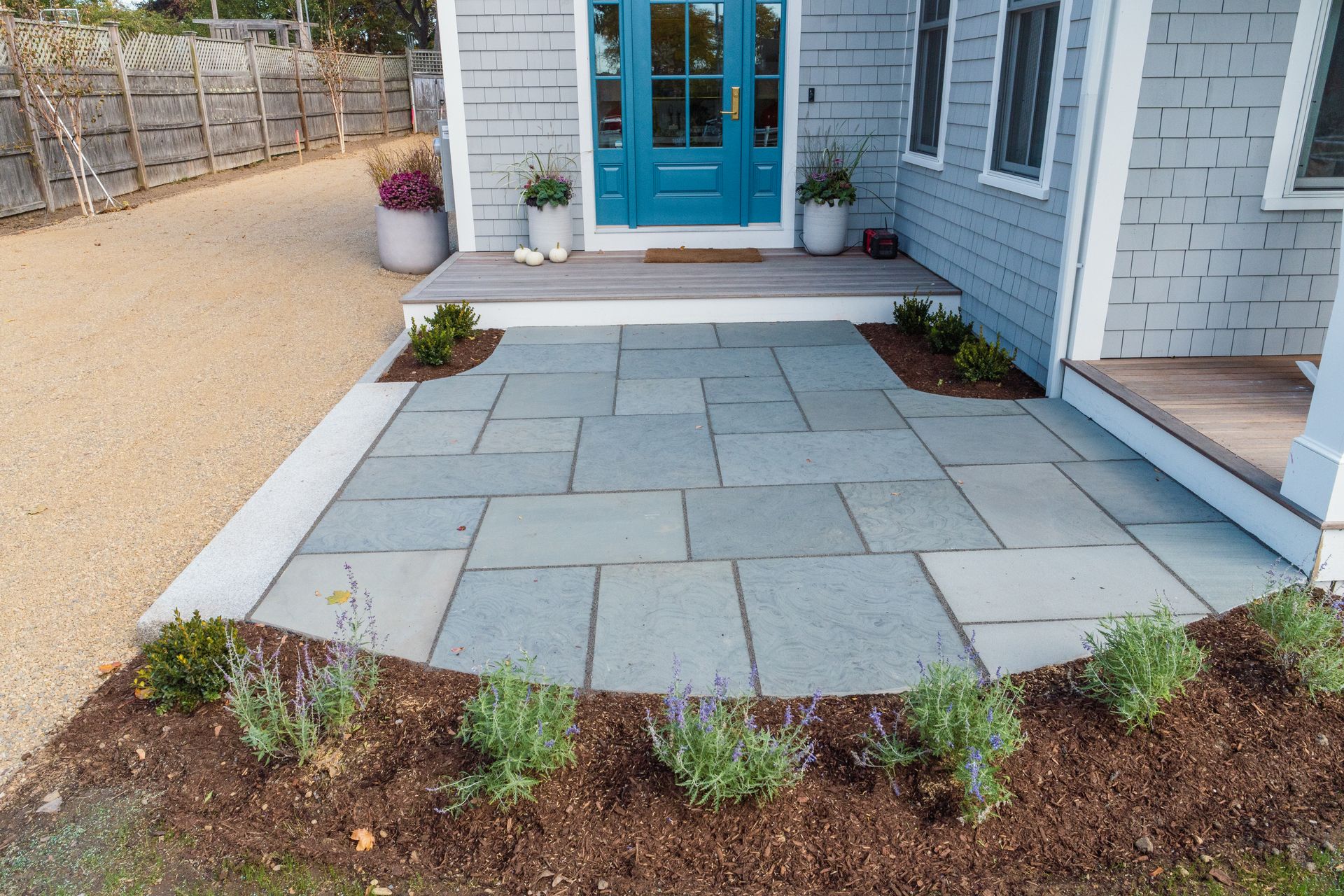
Bluestone is one of our favorite materials for front entrances and garden paths.
Its natural blue-gray color works well with granite steps, brick homes, and mature landscaping.
Bluestone is available in rectangular pieces for a clean, organized pattern or irregular shapes for a more relaxed garden walkway.
Benefits of bluestone walkways:
- Classic New England appearance
- Natural color variations
- Works with both traditional and modern homes
- Available in different sizes and finishes
- Pairs well with granite steps and stone walls
Bluestone typically costs more than standard concrete pavers. Some finishes can also become slippery when wet, so choosing the right surface texture matters.
Concrete Paver Walkways
Concrete pavers are a practical choice for homeowners who want a wide range of colors and patterns.
They can be arranged in running bond, herringbone, or other designs to match the style of your house.
Pavers also make it easier to create curved walkways and decorative borders.
Benefits of paver walkways:
- Many colors, shapes, and textures
- Often more affordable than premium natural stone
- Individual pavers can be replaced if damaged
- Good for curved or straight paths
- Works well with matching paver patios
Paver walkways need a properly compacted base and secure edges. Without those, the stones can spread or settle over time.
Granite Walkways and Steps
Granite is a strong natural stone that's been used around New England homes for generations.
It's especially useful for steps, landings, and walkway borders.
Granite's clean edges can give a front entrance a more structured appearance.
For homes with a raised front door, we can discuss granite steps that connect naturally to a bluestone or paver walkway.
Granite is heavy and often more expensive to install, but it can be an excellent choice for long-term outdoor use.
Brick Walkways
Brick walkways have a warm, traditional appearance.
They're a good fit for Colonial-style homes and older properties throughout the South Shore.
Brick can be installed in several patterns, including herringbone and basketweave.
Proper paving brick is made for outdoor ground use. Ordinary building brick may not be suitable for freeze-thaw conditions.
Brick walkways may also need occasional joint maintenance, especially in shaded areas where moss and weeds can grow.
Natural Fieldstone Garden Paths
If you're looking for a more rustic walkway, fieldstone may be a good option.
Its irregular shapes and earthy colors blend nicely with wooded lots, garden beds, and natural landscaping.
Fieldstone paths work especially well in areas where a perfectly straight walkway would feel out of place.
Because the stones vary in shape and thickness, installation takes more time. The finished surface may also be less uniform than cut bluestone or concrete pavers.
Book a free consult
Tell us about your dream yard
Walkway Design: Getting the Layout Right
Commercial Offices
Installation and maintenance
A walkway should feel comfortable to use, not just look good from the street.
We look at how people move through your property before deciding where the path should go.
For example, if everyone cuts across the lawn to reach the driveway, that may be a sign that the current walkway isn't in the right place.
How Wide Should a Walkway Be?
For many residential front entrances, a walkway around 4 feet wide gives two people enough room to walk comfortably.
Smaller garden paths may be closer to 3 feet wide, depending on how they're used.
If you need a wheelchair-accessible route, we'll discuss the applicable width, slope, and surface requirements.
Straight or Curved Walkways?
Straight walkways work well for formal front entrances and homes with a symmetrical layout.
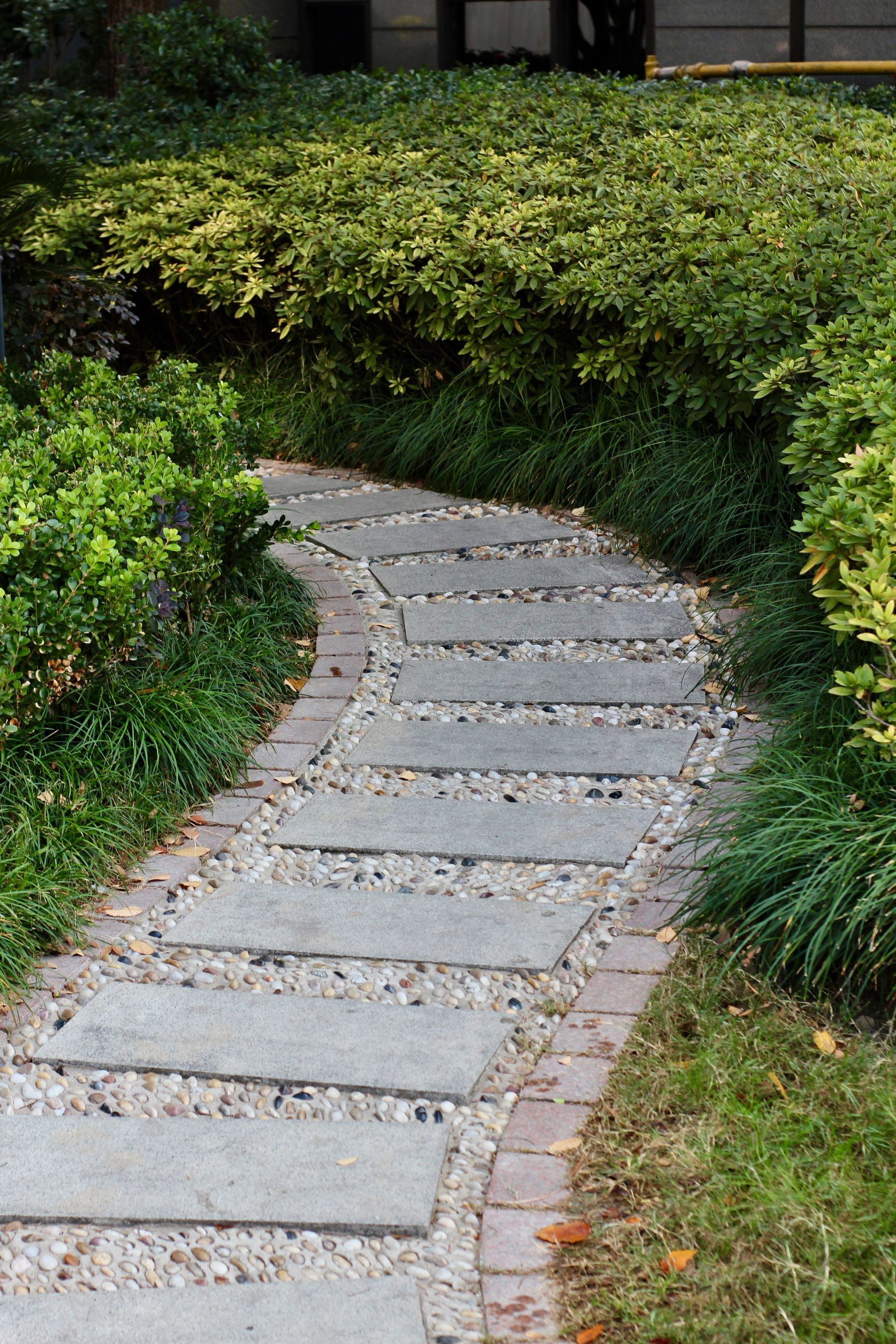
Curved walkways can look more natural in larger yards, especially when they pass through planting beds or around mature trees.
The best design depends on the house, the yard, and where the walkway needs to lead.
We also plan space for landscape lighting, edging, and nearby plants so they don't crowd the walking surface as they grow.
Our Walkway Installation Process
A stone walkway needs a stable foundation to stay level and drain properly.
Here in Massachusetts, freezing temperatures, snow, and spring thaw can cause problems when walkways aren't installed correctly.
Here's how we approach a typical walkway project.
1. Site Visit and Planning
We start by walking the property with you.
We'll look at the existing path, the slope of the ground, drainage, nearby trees, and any steps or landings that need to connect to the walkway.
We'll also discuss materials, patterns, and how you want the finished walkway to look.
2. Layout and Design
Once we have a plan, we mark out the walkway's location, width, and shape.
We pay attention to how the walkway meets your driveway, front steps, patio, or lawn.
If there are changes in elevation, we'll plan the proper slopes or steps.
3. Excavation and Base Preparation
We remove grass, soil, or old walkway materials to make room for a stable base.
For many residential pedestrian walkways, a compacted crushed-stone base may be around 6 to 8 inches deep, although some sites need more.
The correct base depth depends on soil conditions, drainage, material choice, and the installation system.
We compact the base in layers to reduce settling.
4. Drainage and Frost Protection
Water can cause walkway stones to shift, settle, or lift during freeze-thaw cycles.
We plan the walkway's slope to help rainwater drain away from the house and avoid standing water.
Depending on the site, additional drainage work may be needed.
We also take care around tree roots and nearby structures that could affect the walkway over time.
5. Stone or Paver Installation
With the base ready, we begin laying the stone or pavers.
We check spacing, alignment, and surface height as we work.
Depending on the material, we use suitable bedding and joint materials, along with edge restraints where needed.
6. Cleanup and Final Walkthrough
Once the walkway is finished, we clean up the work area and review the project with you.
We'll explain basic maintenance and how to care for the materials you've chosen.
How Much Does Walkway Installation Cost in Norwell, MA?
Walkway installation costs depend on the materials, size, layout, and amount of site preparation needed.
A short, straight paver walkway on level ground will generally cost less than a long bluestone walkway with curves, granite steps, and drainage work.
Here are broad planning estimates for professionally installed residential walkways in Massachusetts:
- Concrete pavers: $20–$35 per sq. ft.
- Brick pavers: $22–$40 per sq. ft.
- Natural bluestone: $30–$55+ per sq. ft.
- Granite or premium stone: $35–$65+ per sq. ft.
- Irregular fieldstone: $30–$55+ per sq. ft.
These are general budgeting estimates, not confirmed Presidential Park Landscape prices. Small projects, difficult access, steps, and additional site work can increase the cost per square foot.
What Affects Walkway Installation Pricing?
- Walkway length and width: Larger paths require more material and labor.
- Material choice: Natural stone and granite usually cost more than standard concrete pavers.
- Excavation: Removing an old walkway, large roots, or unsuitable soil can add work.
- Curves and patterns: Detailed layouts often take longer to install.
- Steps and landings: Changes in elevation may require additional stonework.
- Drainage: Wet areas may need grading or drainage improvements.
- Site access: Narrow side yards and hard-to-reach areas can increase labor costs.
We'll take a look at your property and provide an estimate based on the actual work needed.
Call 781-659-2645 to request a walkway installation estimate.
Replacing Old, Uneven, or Damaged Walkways
If your current walkway has seen better days, replacing it can improve both the look and safety of your property.
Common walkway problems include:
- Loose or rocking stones
- Uneven pavers that create trip hazards
- Cracked or broken concrete
- Water pooling near the front steps
- Grass and weeds growing through large gaps
- Walkways that have settled or shifted
Sometimes individual stones can be reset or replaced. Other times, the base has failed and the walkway needs to be rebuilt.
We'll look at the condition of the existing path and explain which approach makes the most sense.
Connect Your Walkway to the Rest of Your Landscape
A new walkway can be a good starting point for other improvements around your home.
We can add cobblestone edging along the walkway or driveway to create a clean border.
If your front yard has a slope, retaining walls and granite steps can help connect different levels.
For backyard projects, we can build walkways that lead to a stone patio, garden, or outdoor fire pit.
Our landscape design and installation services can also help bring new walkways, planting beds, shrubs, and lawn areas together in one plan.
Stone and Paver Walkway Contractors Serving Norwell and the South Shore
Presidential Park Landscape is based in Norwell, MA, and provides walkway installation and outdoor masonry services throughout the South Shore.
We serve:
- Norwell, MA
- Hingham, MA
- Scituate, MA
- Hanover, MA
- Cohasset, MA
- Marshfield, MA
- Duxbury, MA
- Weymouth, MA
- Rockland, MA
- Pembroke, MA
- Hull, MA
- Braintree, MA
- Kingston, MA
- Plymouth, MA
Whether you're replacing an old front walkway in Norwell, adding a garden path in Hingham, or building a new stone entrance in Scituate, we'll help you choose a design that fits your home.
Frequently Asked Questions About Walkway Installation
What is the best material for a walkway in Massachusetts?
Bluestone, concrete pavers, granite, and suitable paving brick can all work well in Massachusetts. The best choice depends on your budget, the look of your home, and how the walkway will be used. A properly prepared base and good drainage are important for every material.
How long does it take to install a stone walkway?
A simple residential walkway may take a few days to complete. Larger projects with curves, steps, drainage improvements, or detailed stonework can take longer. Weather and site conditions may also affect the schedule.
Is bluestone slippery when wet?
Some bluestone finishes can become slippery, especially when wet or covered with algae. For outdoor walkways, we recommend choosing a suitable textured finish and keeping the surface clean. Proper drainage also helps reduce standing water.
Can you replace a concrete walkway with pavers or natural stone?
Yes. We can remove an old concrete walkway and install a new stone or paver path. We'll first evaluate the existing base, soil conditions, and drainage to determine what preparation is needed.
How wide should my front walkway be?
Many homeowners choose a front walkway around 4 feet wide so two people can walk comfortably side by side. Smaller garden paths may be narrower. The best width depends on the space, how the walkway will be used, and any accessibility requirements.
Do I need a permit for walkway installation in Norwell?
A basic walkway replacement may not require a building permit, but local rules can apply to grading, drainage, work near wetlands, and changes to property access. You can check with the Town of Norwell before starting your project.